

If you have ever tried to dress a weighted reborn doll, you already know the problem. The limbs are soft vinyl, the body is cloth with pellets, and the whole doll weighs about as much as a real newborn. You ease a sleeve over a hand that will not straighten, fight a fastening that sits exactly where you cannot reach it, and worry the whole time that you are going to crease the paint or stretch the neck. I went through that with my first outfit, and I have dressed a lot of things in my years as a home economics teacher. A reborn is not a toy you can wrestle into clothes. It is a collectible art doll, and it needs to be dressed the way you would dress a real baby, only more gently.
A few days after my 20-inch newborn girl, Lily, came home at the end of February, I ordered the Pedolltree pink outfit set for 20 to 22 inch reborn dolls. It comes with a hat, a shirt, trousers, and a pair of socks, all in soft cotton. I chose it because the cotton looked forgiving and the pieces were simple. Six months of dressing Lily two or three times a week has taught me a routine that keeps the vinyl safe and the outfit looking new. Here is the step by step way I do it, including the mistakes I made the first time so you can skip them.
The Cotton Set I Reach For First
The Pedolltree outfit set is the one I use when I want Lily to look tidy without a struggle. Soft cotton, a hat that stays on, and pieces that go on gently.
Amazon Check Today's Price on Amazon →Why the Order Matters
The biggest mistake I see at doll shows is people dressing a reborn the way they would dress a plastic doll. A plastic doll holds still. A weighted reborn does not. The head is heavy, the limbs are soft, and the body is a cloth sack full of pellets. Every piece of clothing has to go on in an order that lets the fabric do the work and keeps your hands off the painted surfaces. The order I use is simple: bottom half first, then the shirt, then the hat. Once you have done it a few times, it becomes automatic.
The other thing to remember is that this is not a race. A reborn is not going to cry or squirm, but it is also not going to help. Rushing is what causes creases, stretched necklines, and snagged hair. I tell myself the same thing I told my students when they were learning to sew: slow is smooth, and smooth is fast. Ten minutes of careful dressing beats twenty minutes of fixing a mistake.
Step 1: Prepare the Surface and the Doll
Start with a clean, soft surface. I dress Lily on the bed with a folded towel underneath, or on the table at a comfortable height. She weighs about five pounds, and a weighted doll that slips out of your hands can scuff its vinyl, so you want a surface that will not add to the risk. The white wicker bassinet in the spare room is where Lily lives, but it is too low for comfortable dressing, and the sides get in the way. A flat surface at waist height is best, with the towel there to catch her if she rolls.
Wash and dry your hands before you touch the doll. Lotions and oils can dull painted vinyl over time, and rooted hair picks up everything. Then check the outfit for loose threads, stray bits from the packaging, or rough seams. The Pedolltree set arrived clean and neatly folded, but I always check, because cotton can pick up lint in storage and a loose thread can catch on a vinyl finger. I also run the pieces through my hands once to make sure nothing sharp is hiding in a seam.
Lay the pieces out in the order you will use them: socks, trousers, shirt, hat. It sounds too simple to matter, but the first time I dressed Lily I had to hunt for the second sock while holding her with one hand. Having everything within reach means you never have to put a half-dressed doll down on a surface you have not prepared. The Pedolltree set comes with all four pieces, hat, shirt, trousers, and a pair of socks, which is one reason I reach for it when I want a complete look without digging through a drawer.
Step 2: Socks and Trousers First
Dress the lower half first. This surprises most people, because with a weighted cloth body the legs are soft and the feet are vinyl, and the ankles do not bend the way a real baby's do. If you try to push a foot into a sock the way you would dress a toy, you will fight yourself. The trick is to move the fabric, not the limb. The limb stays where it is, and you bring the clothing to it.
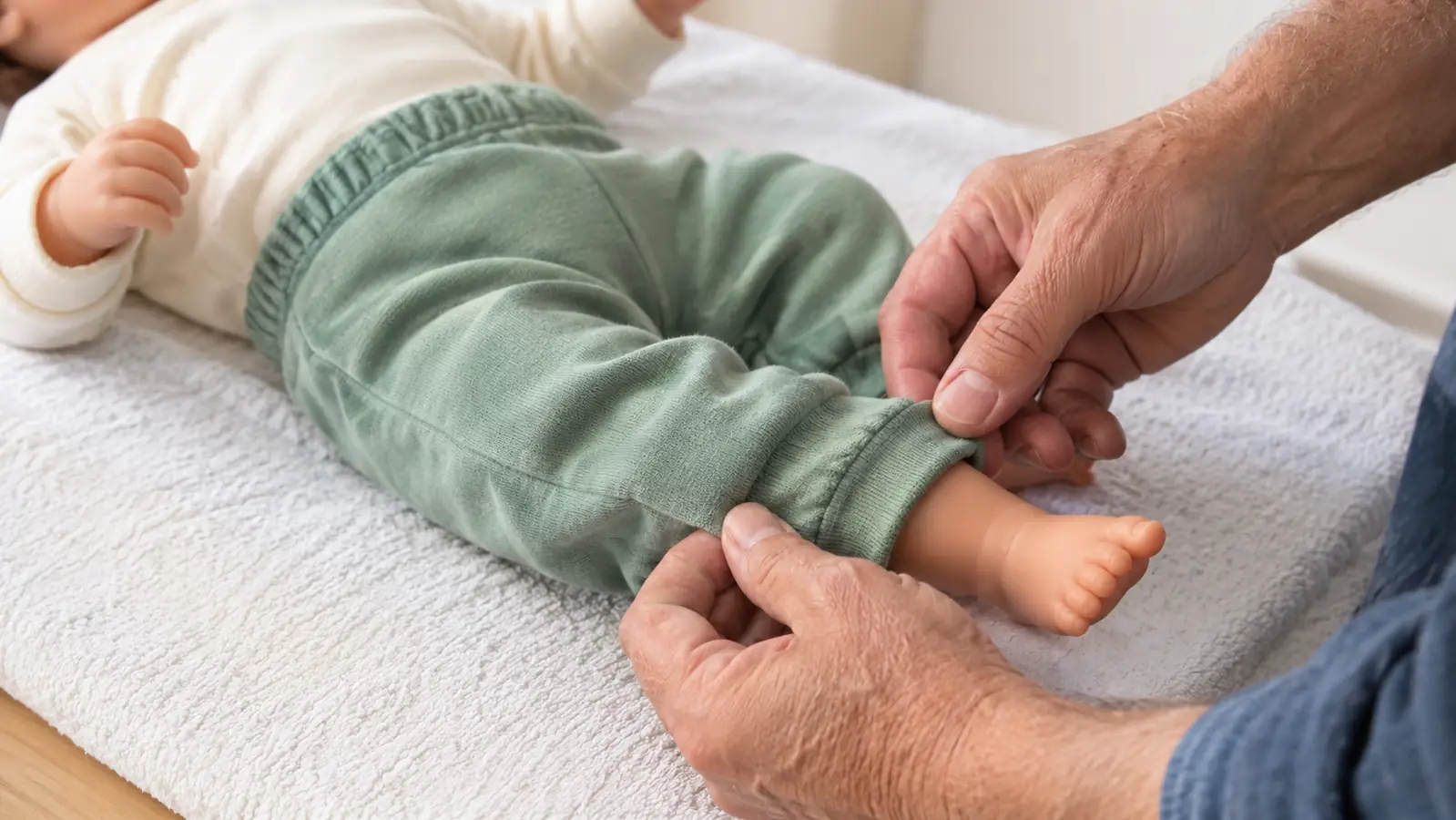
Roll the sock cuff down into a little donut, gather the toe, and ease it over the foot. Then work it up the ankle a few gentle pulls at a time. Do the same with the trousers: gather one leg in your hand, guide the foot through, and work the fabric up the calf. Never pull on the vinyl limb to make the fabric go faster. The paint on the toes and fingers is the first thing to wear, and it cannot be touched up easily. If the fabric sticks, it is usually a twist in the seam, so smooth the fabric rather than pulling harder.
The Pedolltree trousers are cotton with a bit of give, and they fit Lily's 20-inch body well. The cuffs are not tight, which matters, because a tight band around a vinyl ankle can leave a mark over hours of display. Once the trousers are on, smooth the fabric so nothing is twisted behind the knees before you move on. I also make sure the waistband sits at the natural waist, not up under the arms, which is a common mistake with newborn sizes.
Step 3: The Shirt, Arms First
The shirt is the piece most people worry about, because it has to go over the head and the arms. Start with the arms, not the head. Gather one sleeve in your hand like a tube, guide Lily's hand through, and work the fabric up to the shoulder. The vinyl fingers are delicate, so never use them as a handle. If the sleeve bunches, ease it with your fingertips instead of tugging the arm. You want the sleeve to end at the wrist, with the fingers free.
Once both arms are in, gather the shirt body and ease it over her head. The head is weighted vinyl, so it will not tilt to help you. Work the fabric around it rather than expecting the head to move. A gentle twist of the fabric, not a pull, gets the neck opening past the chin. The first time I did this I tried the t-shirt method, head first, and spent ten minutes smoothing wrinkles. Arms first is the order that works, and it works because the fabric has somewhere to go instead of bunching at the neck.
The Pedolltree shirt has a simple shape, and once it is on, it lies flat across the chest without bunching. That matters more than it sounds. A shirt that rides up or twists makes the whole outfit look wrong, and fixing it means undressing and starting over, which is exactly what you are trying to avoid. I also check that the back is smooth before I move on, because a twist in the back will show the moment she is lying in the bassinet.
Step 4: The Hat, Without Rushing
The hat is the piece that makes the outfit look finished, and it is also the easiest to rush. A reborn's rooted hair can be disturbed by a hat that is pulled on and off carelessly, and the vinyl scalp underneath is painted. You want the hat to sit, not scrape. I have seen beautiful dolls with bald patches on the scalp from hats that were dragged across the rooted hair, and it is not something you can fix at home.
Turn the hat inside out and check the inner seams first. A rough seam can snag rooted hair. Then cup the crown in your palm, place it over the top of the head, and ease the brim down. If it is crooked, lift it and reset it. Do not slide it around, because sliding drags the hair with it. The brim should sit just above the eyebrows, the way a real newborn hat sits, not pulled down over the eyes.
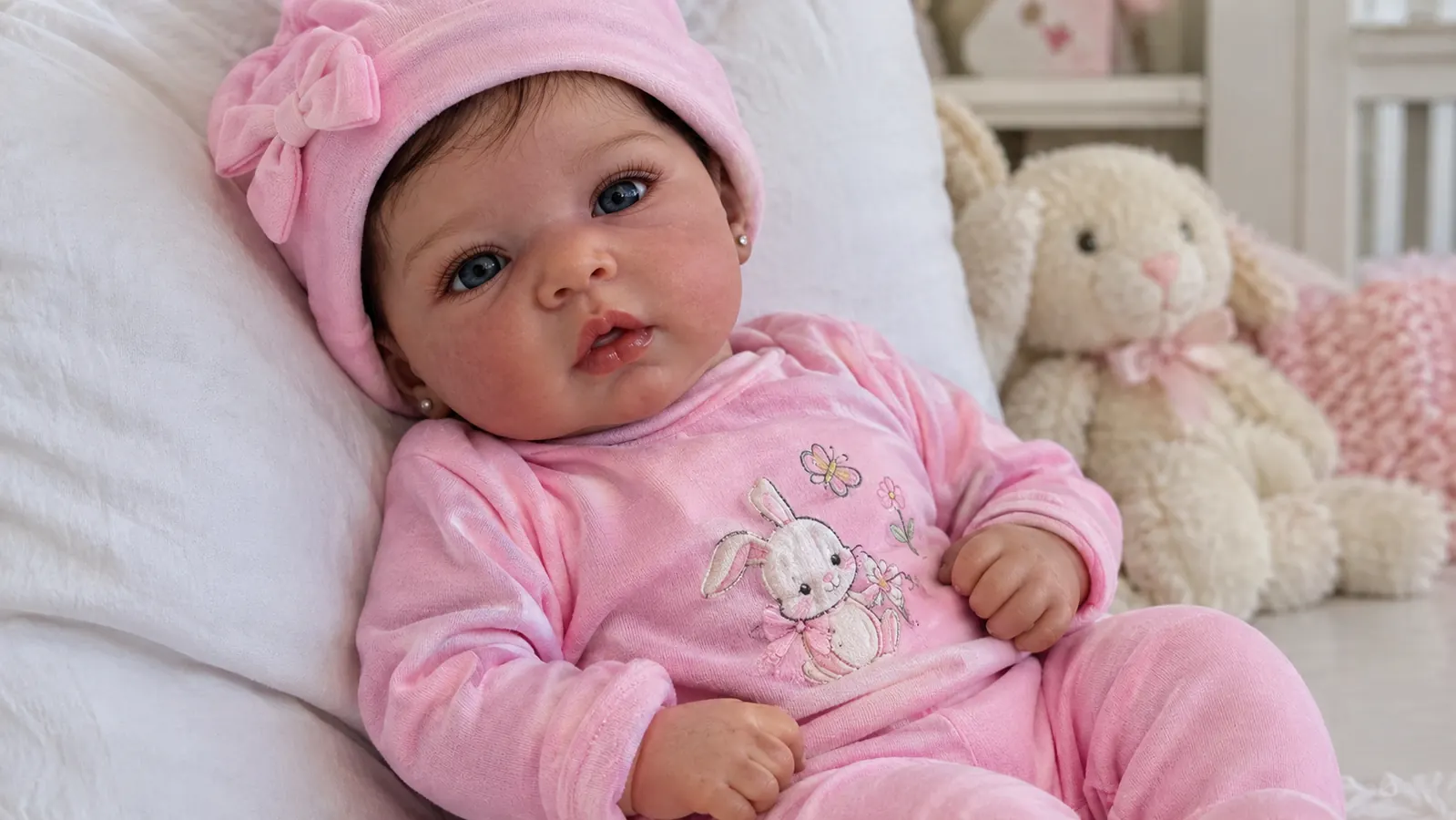
The Pedolltree hat is cotton, and it stays on Lily's head without being jammed down. I did not expect that. I have had hats that slip off the moment a doll is picked up. This one sits well, and because it is cotton, it does not make her look overheated the way a synthetic fabric would. The set is white and pink, and the hat matches the shirt and trousers, which gives the whole outfit a put-together look.
Step 5: The Final Check
Once everything is on, do the check I cannot skip. Look at the seams: the shirt seam should sit at the shoulder, not halfway down the arm. Run a finger under the waistband of the trousers to make sure it is not twisted. Check that no fabric is bunched behind the knees, because a crease pressed into vinyl over a long display can be hard to lift. These are the same checks I taught in my sewing classes, and they apply to a reborn exactly as they apply to a baby.
Then look at the hands and feet. The fingers should be free, not folded under a cuff. I learned this the hard way when I left a sock half on and found a crease across Lily's toes the next morning. It faded, but it taught me to check before she goes back in the bassinet. The toes and fingers are the most painted parts of a reborn, and they are the parts most likely to show wear.
Finally, settle her in the white wicker bassinet in the spare room, away from the window, where the sun will not fade the cotton or the vinyl. A dressed doll should look like a sleeping baby, not a mannequin. When the outfit is arranged right, it looks effortless. That is the goal, and it takes about ten minutes once you have the order down. The first time I dressed Lily, it took me almost half an hour. Now it is part of the routine, and it is one of my favorite parts of the day.
What Else Helps
Hand wash the set. The care instructions say hand wash only, and I follow that. Cool water, a drop of gentle soap, lay it flat to dry, never wring it. The cotton in this set has held its shape through six months of washing, and the white and pink have not bled into each other. The listing describes the clothes as handmade, and the stitching has held up. I wash it about once a month, or whenever it has picked up dust from being on display.
Keep a second outfit if you can. You do not need a wardrobe, but one spare set means you can wash one while the other is on display. I also store the set flat in a drawer. Hangers stretch the shoulders of small cotton clothes. The package this set arrives in is small, about nine inches across, and I kept it for storage.
One more thing: check the fit on your own doll. The Pedolltree set is made for 20 to 22 inch reborns, and it fits Lily, who is 20 inches, with a little room to spare. If your doll is at the larger end of that range, the fit will be closer, and that is fine as long as nothing is tight around the vinyl. Cotton has some give, but it does not stretch the way a knit does, so when in doubt, size up.
Six months of dressing and undressing Lily two or three times a week, and the Pedolltree set still has no loose seams, no stretched cuffs, and no color bleeding.
The Bottom Line
If you have a 20 to 22 inch reborn and you want an outfit that goes on gently and holds up to regular handling, this Pedolltree set is a good place to start. The cotton is soft, the pieces are simple, and the hat stays on, which is rarer than it should be. It is not a fancy outfit, and it does not try to be. It is the kind of practical, well-made clothing that I would have recommended to my students, and I recommend it the same way now.
The real lesson from six months of dressing Lily is that the routine matters more than the outfit. Dress the lower half first, put the shirt on arms first, ease the hat on without dragging, and check the seams before she goes back in the bassinet. Do that, and you can dress any reborn in any outfit without stressing the vinyl. The Pedolltree set just happens to make it easy.
Dress Your Reborn Without the Worry
If you have a 20 to 22 inch reborn and you want an outfit that goes on gently and holds up to regular handling, the Pedolltree cotton set is the one I keep coming back to.
Amazon Check Today's Price on Amazon →